

Hello my friend! Hope you are doing well, and that January was a great month for you? I wanted to create a new newsletter series that would fill your inbox once a week with encouragement - something that stays with you through the week, through every hard moment and every difficult challenge, you are reminded of The Living Well.
“Worry weighs a person down; an encouraging word cheers a person up.”
Proverbs 12:25 NLT
I named it “The Living Well” because, honestly, the name came to me while I was filming Instagram Stories, talking about my passion for helping people feel refreshed. And I love the name - because when we think about water and how we literally can’t live without it, I feel the same way about encouragement!

Words have the power to shape our entire day, week, or even month. For me, a single cruel comment from my modelling agent - “You are disgusting” - left such a deep impact that I struggled with body dysmorphia for years. The issue wasn’t just what she said - she should have realised the power of her words - but also the fact that I believed her. I think we often throw our words around like pebbles into a pond, not realising that each one creates ripples that spread further than we sometimes expect.
“Pleasant words are like a honeycomb, Sweet and delightful to the soul and healing to the body.”
Proverbs 16:24 AMP
Our words are not meaningless; because you are not meaningless.
And yet I think that is the issue - so many of us don’t place value on ourselves. We don’t see ourselves as treasured, cherished, or as the important and vital parts of this world that we truly are. So if you think you don’t matter, you aren’t going to consider that your words matter, or that they could make that much of an impact on someone else.
I love the quote I shared above, “pleasant words are like honeycomb, sweet for the soul”, I love being a source of encouragement for someone - we never know what a person might have walked through or even what they have experienced that day, and none of us can carry that responsibility. I do believe though, we have the power to change a person’s day, and it can be with something so simple.
Last week I used the public toilets at St Pancras Station in London, and I walked up to the older male who was cleaning the bathrooms, I just felt a nudge to go and thank him for cleaning the toilets. I didn’t want to, I thought it was silly and that he would think I was strange. So I procrastinated, washed my hands twice, went to get tissue I didn’t need, and eventually found the courage to walk up to him and say “I just wanted to say, thank you”. The look on his face is one I will not forget soon. He was blown away by my very simple thank you, his whole face lit up and he had the sweetest smile. He said “you’re welcome” and I weirdly said “you’re welcome” back, I totally stumbled on my words (LOL). I walked away and was SO GLAD that my silly fear of looking stupid or being rejected didn’t hold me back from the human emotion I saw run over his face.
Could you take a moment today to reflect on the words you use?
Where could you offer someone encouragement?
I also want to encourage you - if you are someone who truly benefits from words of affirmation or encouragement (I personally believe they’re valuable for all of us, but they hold greater meaning for some) - to communicate this with close friends or family. If you feel that others may not be aware of this, or if expressing encouragement doesn’t come naturally to them, having an open conversation could be a great opportunity to deepen your relationship. It may also help you discover whether they, too, appreciate words of encouragement.

Practical Tools
Here are 3 practical ways that you can consider the words you use:
1. The “One Kind Word” Habit
- Make it a daily habit to intentionally say something encouraging to at least one person each day
- This could be a compliment, a word of appreciation, or even a simple "thank you" to someone whose efforts often go unnoticed
- Make sure it’s genuine… mean what you say
2. Reframe Negative Self-Talk
- Just as words impact others, they also shape how we see ourselves
- Question the negative self-talk you hear yourself say - where does that come from? Could you share that with someone and ask them to support you in changing this negative self-talk?
- Pay attention to negative thoughts about yourself and replace them with encouraging truths (e.g. Instead of "I'm not good enough," you could say, "I'm learning and growing every day")
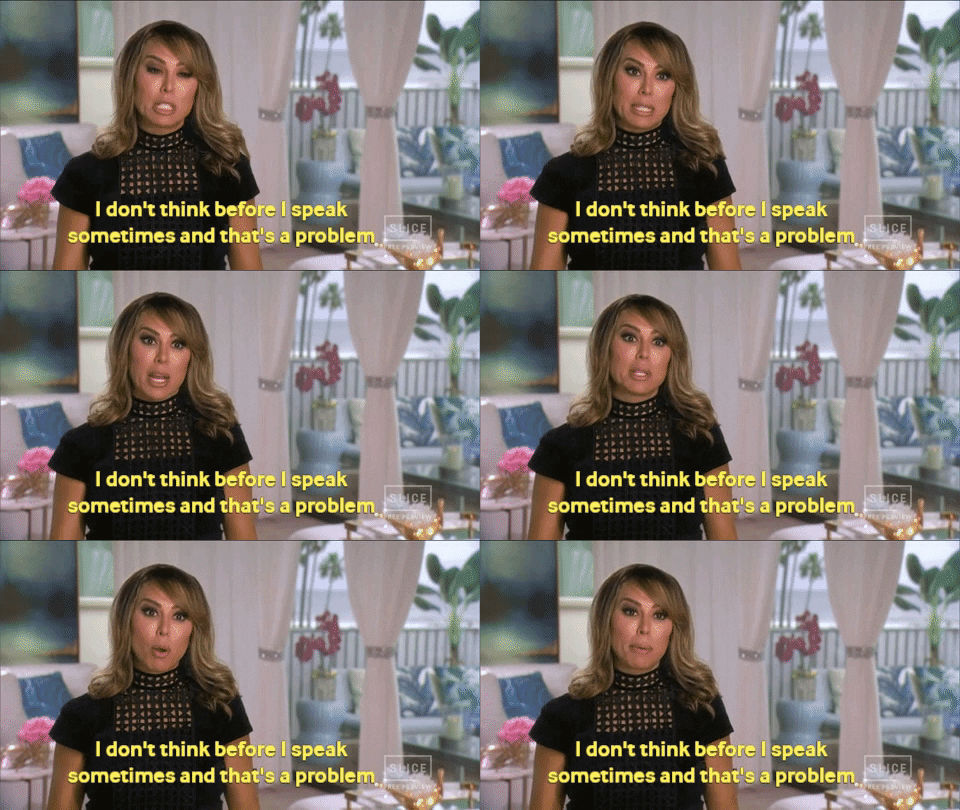
3. Pause Before You Speak
- Before responding in conversations, take a quick pause and ask:
- Is this helpful?
- Is this kind?
- Would I want to hear this said to me?
This small moment of reflection helps ensure our words bring life instead of discouragement.